Description
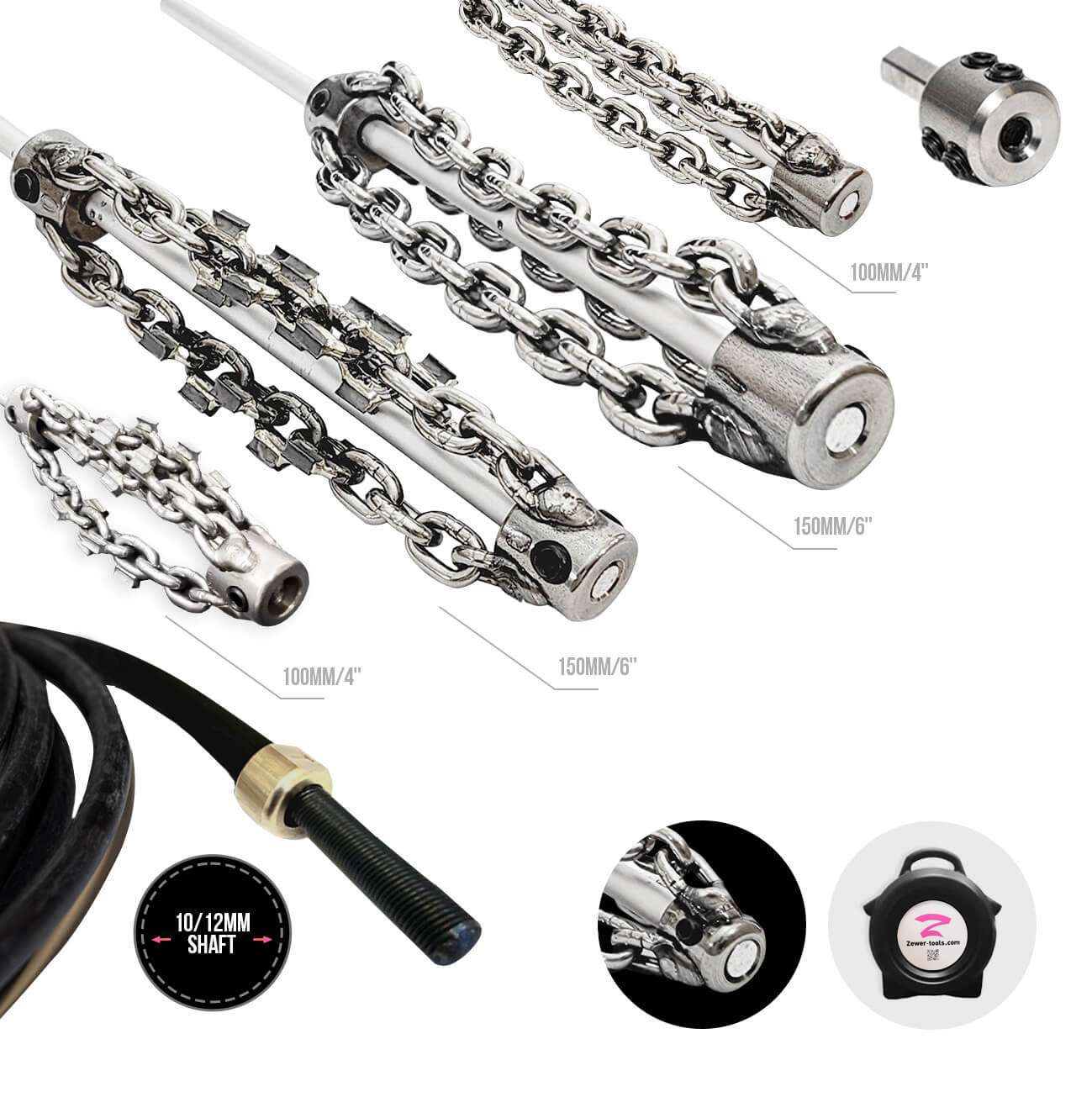
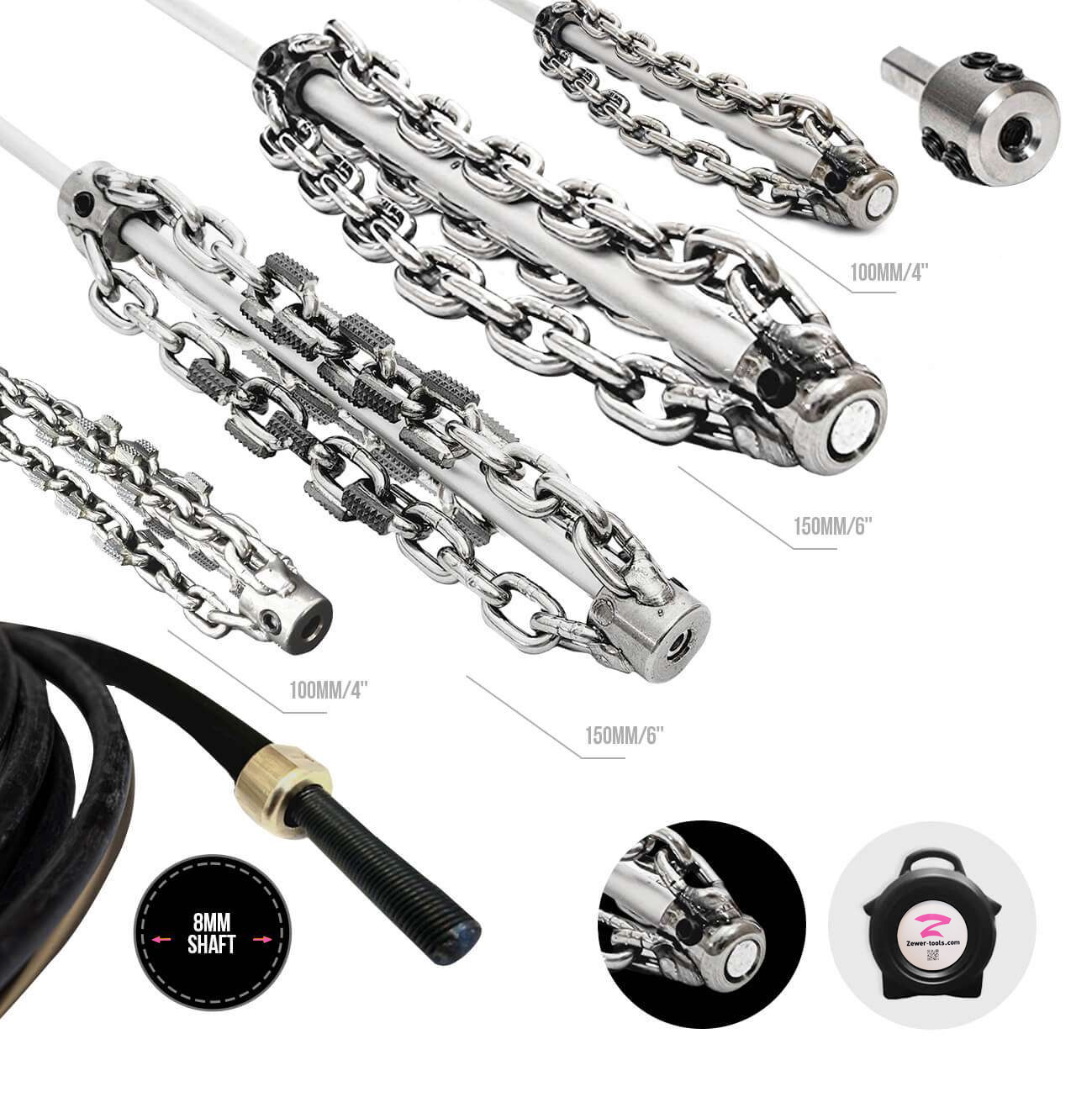
This blockage removal kit is intended for clearing obstacles in 100mm–150mm pipes.
Depending on your selection, you can clear blockages in metal and ceramic pipes or PVC pipes (or both PVC and metal/ceramic pipes).
This kit is designed to break down and remove solid obstructions such as root intrusion, hardened scale, cement, and failed liners, reducing them into small fragments that can safely flow through the pipe system.
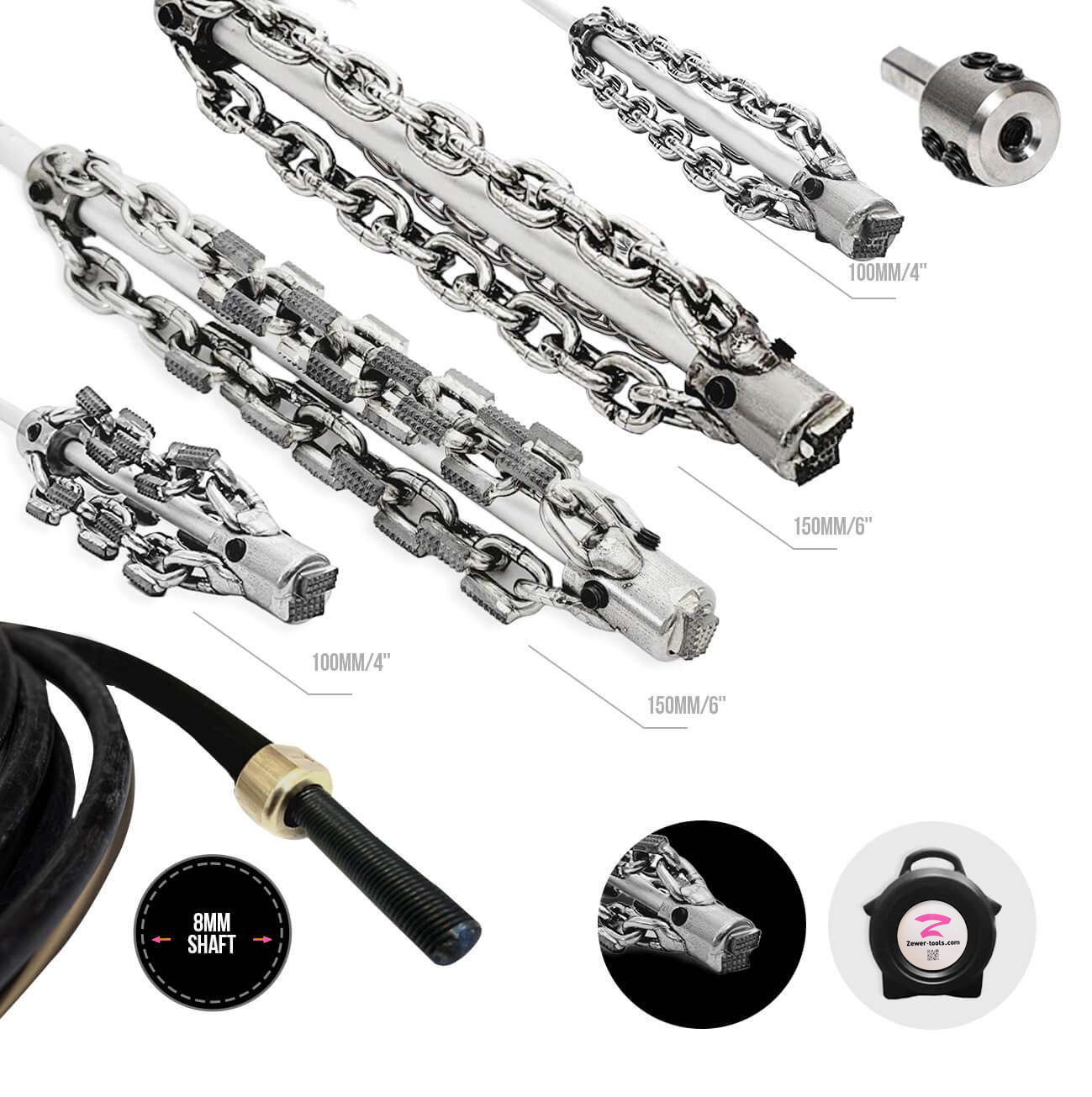
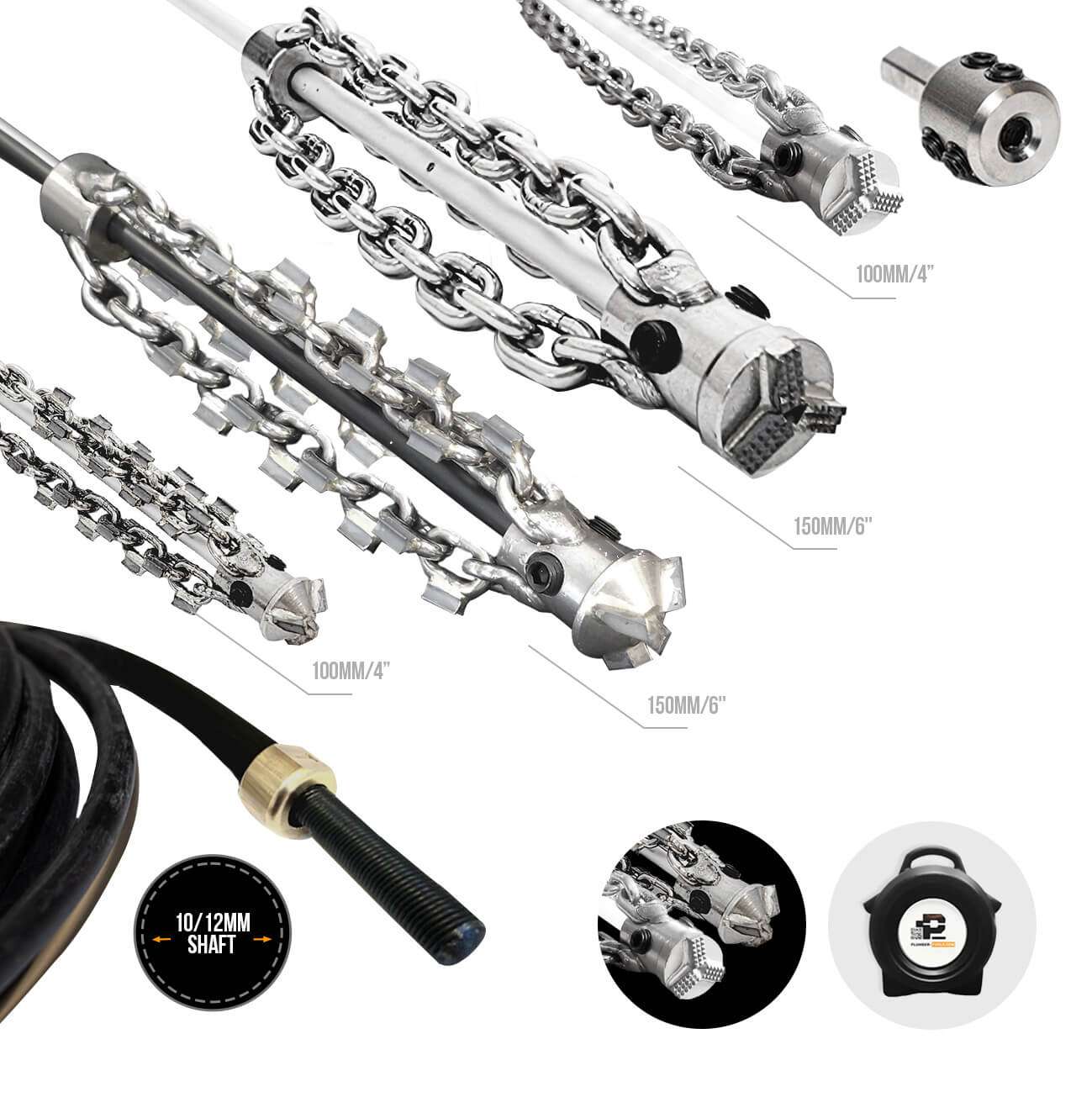
Depending on your selection (PVC or metal and ceramic pipes), the chains will vary.
The chains for PVC pipes do not have tungsten carbide bits fused to the cutting edge. This prevents damage to the PVC pipe wall. The PVC chains can be used in metal and ceramic pipes if needed, but they will work more slowly than the chains with hard metal bits fused to the cutting edge.
The chains for metal and ceramic pipes have tungsten carbide bits fused to the cutting edge, which makes them more aggressive than the PVC chains. We do not recommend using these chains inside PVC pipes.
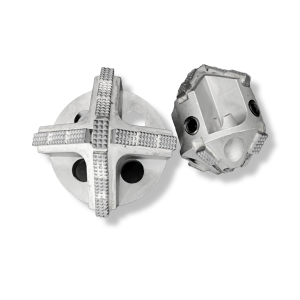
Depending on your selection, you can choose drain cleaning chains with or without a drill head. The Croco/Crown drill head is fused to the front of the chain assembly and is designed for forward cutting action, such as cutting roots or grinding up a failed liner within a wastewater pipe. The number of hard metal alloy bits on the drill head will vary depending on the size of the chain you choose. If you need a specific configuration, please contact us before placing your order.
- Lubricate the shaft thoroughly as shown here.
- Select the correct chain type for PVC or metal/ceramic pipes.
- Connect the shaft to a drill using a drill-to-shaft adapter and set the torque limiter as shown here.
- Insert the system into the pipe via an access point.
- Rotate the shaft to engage the chain cutting action.
- Slowly advance the tool through the blockage, allowing the chains to grind material away.
- Use a camera if required to monitor progress in real time.
- Remove debris and repeat if necessary until the pipe is cleared.
- 8mm shaft is a lightweight shaft and is suitable for soft blockages such as grease. It is also our second most flexible shaft, making it a good choice for pipes with multiple bends.
- 10mm shaft is less flexible and can usually pass through around 2–3 bends. This is a heavy-duty shaft that provides more torque and is suitable for both soft and hard blockages, as well as descaling.
- 12mm shaft is our most rigid shaft and provides the highest amount of torque, but it is also the least flexible option.
Always lubricate your shaft before first use.
Please follow this link to learn more about why lubrication is important and how to lubricate your flexible shaft.
Do not use the shaft inside the carrier.
When operating, your shaft should be unwound to at least a 1m diameter, which is the natural coil size where friction and heat buildup are minimized. Otherwise, friction and heat buildup between the shaft and the sleeve will significantly reduce the shaft's performance and lifespan.
Points to note




 Български
 Hrvatski
 Čeština
 Dansk
 Nederlands
 English
 Eesti
 Français
 Deutsch
 Ελληνικά
 Magyar
 Italiano
 Lietuvių kalba
 Polski
 Português
 Română
 Slovenčina
 Slovenščina
 Español
 Svenska