
Are drain Chains Safe for Pipes With Channel Rot?
While we suggest using a Picote Smart Spider in drains with channel rot, we do understand that our customers might not have one on hand.
In flex shaft drain cleaning systems, the way you connect shafts is not just a detail, it directly affects performance, safety, and tool longevity.
One common question is whether a T-slide quick connector can be used to join flexible shafts instead of a shaft-to-shaft connector.
While it may seem like a convenient shortcut, the reality is more technical.
A flex shaft drain cleaning system uses a rotating flexible cable (shaft) to drive cutting or cleaning heads inside pipes. It’s commonly used for:
Because the shaft transmits torque at high speed, every connection point becomes a critical stress area.
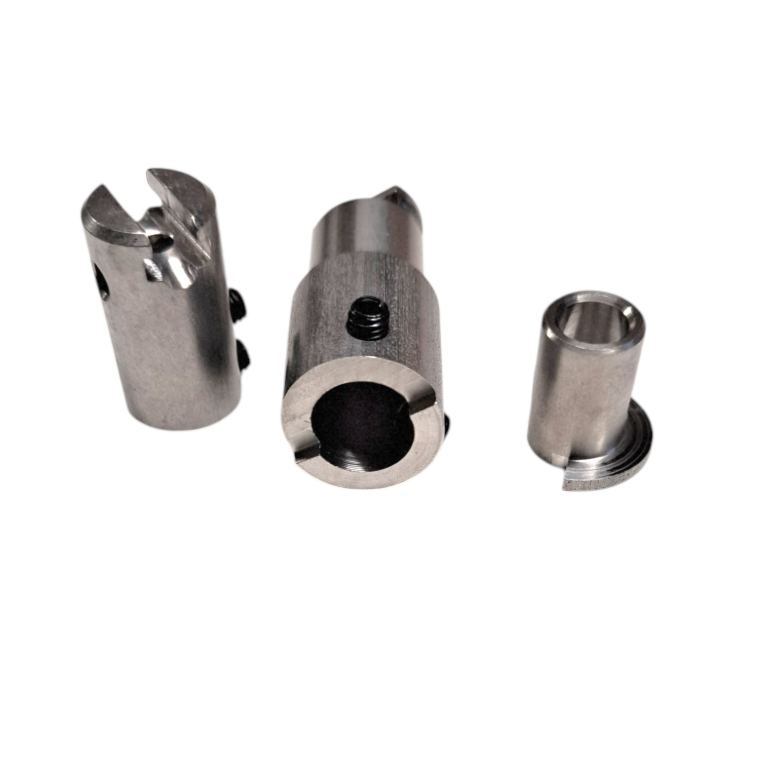
A T-slide connector is a quick-connect solution that can be used to join shafts together.
It is not designed for high torque at high speed.
That means under load, it can slip, loosen, or wear out faster than expected, especially in demanding drain cleaning work.
A shaft-to-shaft connector is designed specifically for transmitting torque between flex shafts.
Smaller diameter versions are now available for 6mm and 8mm shafts, making it easier to navigate tight pipe bends while maintaining strength.
Larger sizes like 10mm and 12mm remain unchanged due to their use in larger pipe systems.
The difference comes down to one critical factor:
Torque handling under real working conditions
If you’re doing occasional light work, a T-slide may function, but we strongly recommend using a shaft-to-shaft connector to join two shafts, as it is the safer and much more reliable choice.
In real-world flex shaft drain cleaning, failures happen under:
A weak connection point can lead to:
That’s why connector choice is a performance decision, not just a convenience one.
For consistent results:
While T-slide connectors offer speed and convenience, they are not designed to handle the torque demands of flex shaft drain cleaning.
For reliable performance, shaft-to-shaft connectors remain the superior solution, particularly with newer compact designs for smaller shaft sizes.
For a more visual explanation, please refer to this video.
While we suggest using a Picote Smart Spider in drains with channel rot, we do understand that our customers might not have one on hand.
After drain descaling it is tempting to stop as soon as the camera shows a cleaner pipe wall. However, the scale, rust, grease and other
Hydro jetters and flexible shaft machines are both powerful tools for professional drain cleaning, but they work in very different ways. A jetting machine uses
Introduction When working with professional drain cleaning equipment, transporting and handling flexible shafts can quickly become a challenge, especially when dealing with longer, heavier cables.
 Български
 Hrvatski
 Čeština
 Dansk
 Nederlands
 English
 Eesti
 Français
 Deutsch
 Ελληνικά
 Magyar
 Italiano
 Lietuvių kalba
 Polski
 Português
 Română
 Slovenčina
 Slovenščina
 Español
 Svenska